
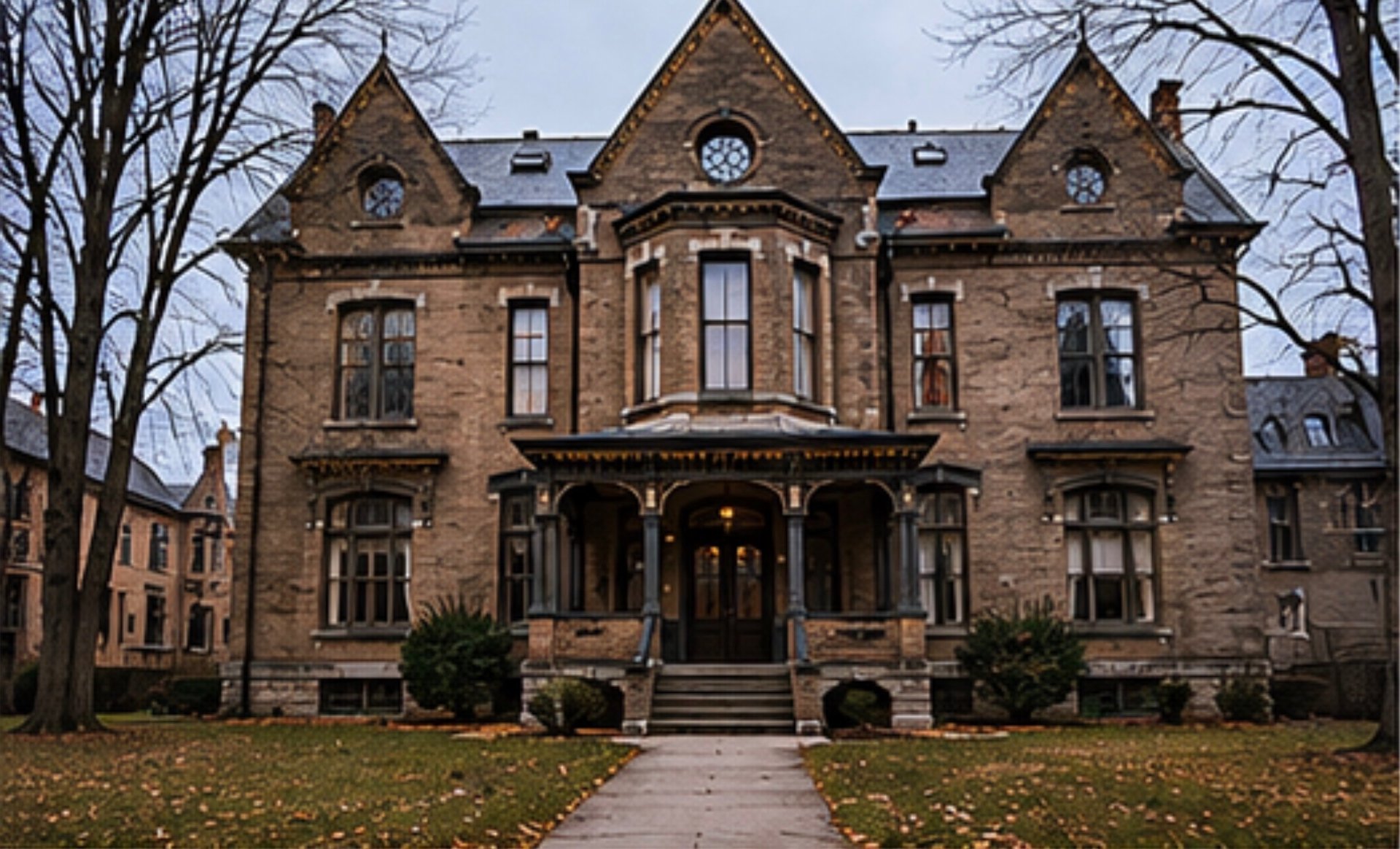
— Duskmoor — Est. 1887
Riverview Mental Hospital
Inpatient Psychiatric Care
Riverview has operated continuously on Ashford Road since 1887. We evaluate and stabilize patients experiencing acute psychiatric crises through structured and individualized treatment.
Conditions We Treat
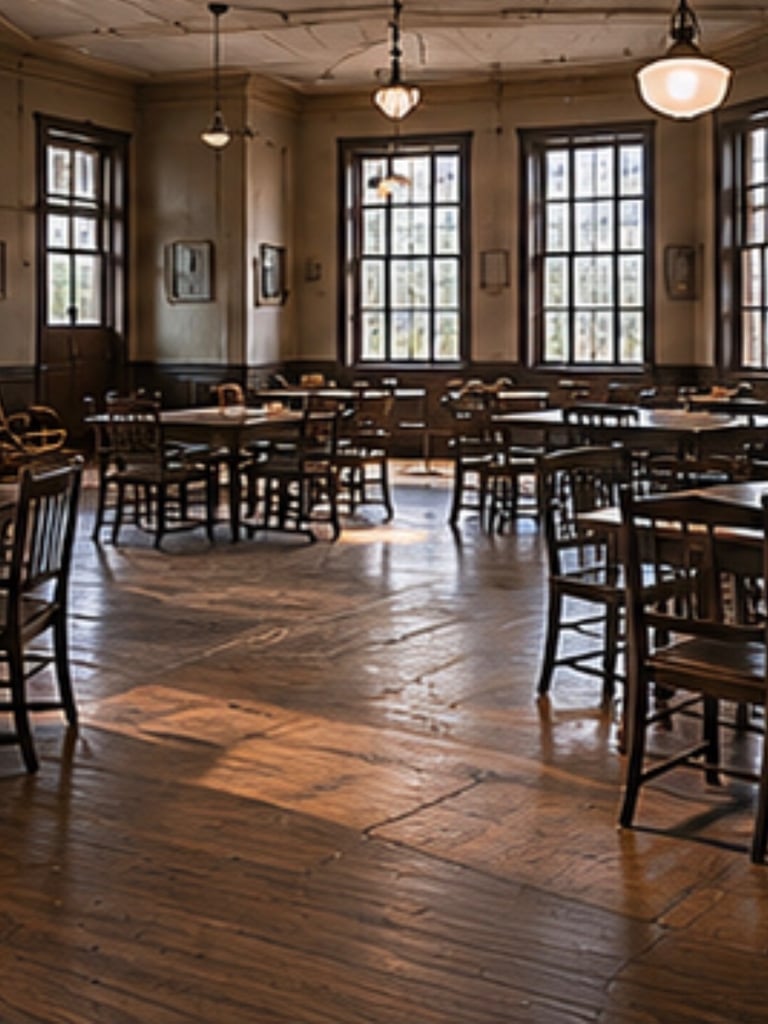
At Riverview Mental Hospital, our physicians and behavioral specialists provide long-term residential treatment for a wide range of psychiatric and neurological conditions. Our facility has served the Duskmoor region for more than a century, offering structured care in a secure therapeutic environment.
Commonly Treated Conditions
Major Depressive Disorder
Generalized Anxiety & Panic Disorders
Bipolar Spectrum Disorders
Schizophrenia & Schizoaffective Disorders
Obsessive Compulsive Disorder (OCD)
Post-Traumatic Stress Disorder (PTSD)
Dissociative Disorders
Sleep & Parasomnia Disorders
Memory Degradation Syndromes
Behavioral Disturbance & Violent Episodes
Specialized Riverview Diagnoses
River Toxin Chronic Psychosis (RTCP)
First documented in isolated communities surrounding the Thorne River basin near Duskmoor, River Toxin Chronic Psychosis is a rare and poorly understood neuropsychiatric condition associated with prolonged environmental exposure to unidentified industrial contaminants.
Patients presenting with RTCP commonly report:
Persistent auditory hallucinations
Night terrors and disrupted circadian cycles
Severe paranoia and social withdrawal
Recurrent memory fragmentation
Episodes of fugue-like wandering near wooded or river-adjacent areas
While research remains ongoing, Riverview Mental Hospital has maintained a dedicated observation and containment ward for RTCP patients since our inception. Due to the unpredictable progression of symptoms, extended residential treatment is often recommended.
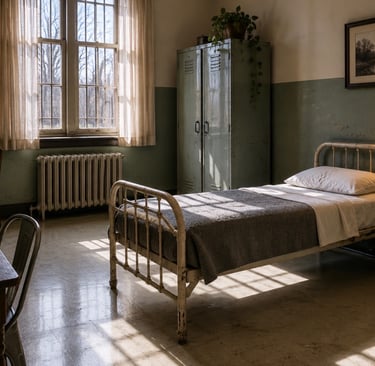
Admissions & Patient Intake
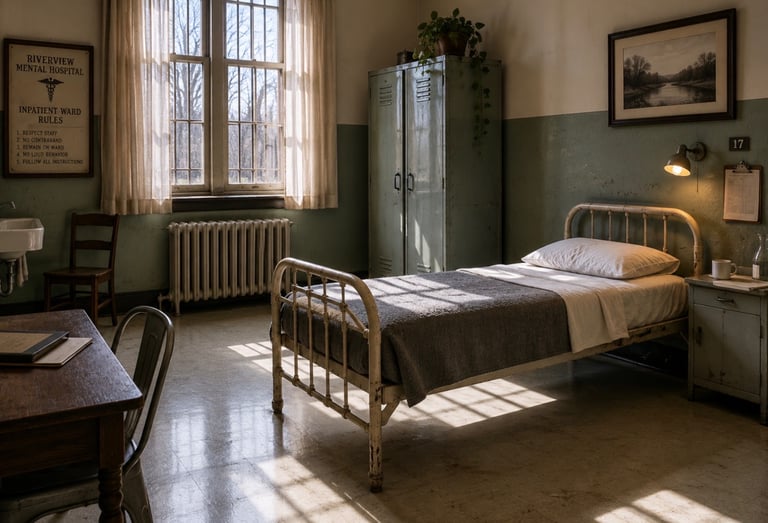
Since its establishment in 1887, Riverview Mental Hospital has served the residents of Duskmoor and the surrounding county with compassionate psychiatric care rooted in stability, discretion, and community protection. Our admissions process is designed to ensure that every patient receives the level of observation and treatment deemed necessary for their wellbeing — and for the continued peace of the town we proudly serve.
Voluntary Admission
Individuals seeking treatment may request voluntary admission through physician referral or direct evaluation by Riverview staff. Patients are welcomed into a secure therapeutic environment where they can recover away from the pressures, anxieties, and outside influences that may have contributed to emotional distress.
To preserve the integrity of treatment, newly admitted patients undergo an initial observation period. During this time, outside communication may be temporarily restricted while our specialists determine the most effective course of care.
Involuntary Commitment
In accordance with county and state statutes, Riverview Mental Hospital may accept individuals deemed a danger to themselves, disruptive to public order, or unable to distinguish harmful delusions from reality.
For over a century, local officials have relied upon Riverview’s expertise in handling sensitive cases requiring discretion and long-term supervision. Patients admitted under involuntary commitment are placed under continuous evaluation until hospital administrators determine they are suitable for reintegration into society.
In certain circumstances, visitation privileges may be suspended indefinitely if outside contact is believed to interfere with recovery or institutional safety.
Intake Evaluation
Upon arrival, all patients complete a comprehensive intake assessment including:
Psychological screening
Medical examination
Behavioral history review
Personal effects cataloging
Cognitive compliance assessment
For the comfort and security of all residents, prohibited materials, recording devices, personal journals, and unauthorized correspondence are collected during intake and retained by hospital administration for review.
Family & Community Involvement
Riverview encourages families to remain patient and trusting throughout the treatment process. Due to the confidential nature of psychiatric care, updates regarding a patient’s condition or release timeline may be limited.
Many of our long-term residents arrive frightened, confused, or resistant to treatment. With time, structure, and proper guidance, most become quiet, cooperative members of the Riverview community.
A Tradition of Care
For generations, the people of Duskmoor have entrusted Riverview Mental Hospital with those who could not be helped elsewhere. From periods of civil unrest to times of economic hardship, the hospital has remained a steadfast institution overlooking the river valley — unchanged, watchful, and devoted to preserving order in uncertain times.
Some patients stay only weeks.
Others discover they are safer remaining with us.
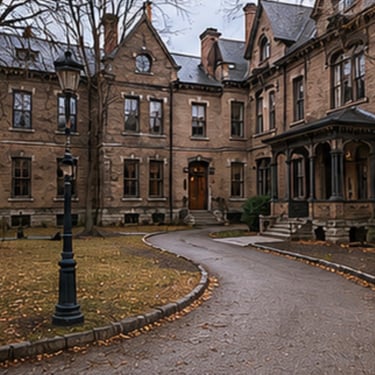
The Riverview Building
Perched above the rippling waters of the Thorne River, Riverview Mental Hospital has stood watch over Duskmoor for well over a century. Constructed in 1887 from locally quarried stone, the sprawling Gothic structure is regarded as one of the oldest and most recognizable landmarks in the county.
Its towering facades, narrow lancet windows, and iron-roofed spires were originally intended to inspire peace and dignity through isolation from the noise of the outside world. Even now, the building remains largely unchanged from its original design, a testament to the permanence of Riverview’s mission.
Generations of patients, physicians, public officials, and grieving families have passed beneath its archways. Some arrived seeking treatment. Others arrived because there was nowhere else for them to go.
The people of Duskmoor have long said the lights in Riverview never truly go dark. Even in the deepest hours of winter, someone is always awake behind the windows overlooking the valley.
And someone is always watching.